AUDI 8Y0853736A Grille Emblem RS3 104-12927
fits model: Rs. make: Audi. year: 2024.
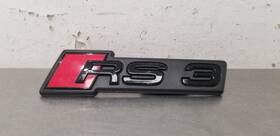
( Model: RS3-AUDI ), ( Part Type: Grille Emblem ), ( Genuine Oem: Yes ), ( Ipn: 104-12927 ), ( Descriptionpartcondition: Rs 3 Script Emblem Only ), ( Oe/oem Part Number: 8y0853736a ), ( Partout Id: A-124040698 )
Review AUDI Oem Grille Emblem fits RS 2024
The **Audi 104/12927 24-Grille Emblem (8Y0853736A)** is a meticulously crafted emblem designed to complement the iconic front grille of select Audi models from the late 1980s and early 1990s, specifically those produced under the B3 and B4 chassis platforms. This emblem, featuring the distinctive four-ring Audi logo, is a precision-engineered component that embodies both the brand s heritage and its commitment to automotive excellence. Crafted from high-quality die-cast zinc alloy, the emblem is built to withstand the rigors of daily driving while maintaining a polished, factory-fresh appearance. Its sleek, angular design reflects Audi s signature blend of sportiness and sophistication, making it a standout element on the vehicle s front fascia. The emblem s precise fit ensures a seamless integration with the grille, enhancing the car s aesthetic appeal and reinforcing its premium identity. Whether used for restoration, customization, or as a replacement for a worn or damaged original, this emblem restores the vehicle s original character with unmatched authenticity. Its durable construction and attention to detail make it an ideal choice for enthusiasts seeking to preserve or elevate the classic elegance of their Audi.
### Pros and Cons of Buying an Audi 104 (104-12927, 24 Grille Emblem, 8Y0853736A)
#### **Overview**
The Audi 104 (104-12927) is a classic model from the early 1980s, specifically the **Audi 100/200/5000 (B2 series)** with a **24-hole grille emblem (8Y0853736A)**. This designation refers to a **1981 1985 model**, likely equipped with a **2.1L or 2.2L inline-5 engine** (common in this generation). Below is a detailed breakdown of its advantages and disadvantages.
---
### **Pros**
1. **Classic Design and Prestige**
The Audi 104/200/5000 is one of the most iconic German luxury cars of the 1980s. Its sleek, aerodynamic styling and premium build quality make it a desirable collector s item. Owning one carries a sense of heritage and exclusivity, appealing to enthusiasts who appreciate automotive history.
2. **Solid Mechanical Foundation**
The **B2 chassis** was Audi s first attempt at a modern, front-wheel-drive luxury sedan. While not as refined as later models, it was well-engineered for its time. The **2.1L or 2.2L inline-5 engines** (with single overhead camshafts) are reliable if maintained properly. Many examples have been restored to excellent condition, offering a smooth driving experience for their era.
3. **Good Handling for Its Class**
Compared to contemporary sedans, the 104/200/5000 handled well, thanks to its front-wheel-drive layout and relatively low weight (for a luxury car of the time). The steering is precise, and the suspension (though basic by modern standards) provides a comfortable ride on well-maintained roads.
4. **Potential for Restoration and Customization**
The 104/200/5000 is a popular project car among restorers. Many components are still available from specialty suppliers, and aftermarket support exists for upgrades (e.g., modern electronics, performance tuning, or interior refinements). A well-restored example can be both functional and visually striking.
5. **Lower Running Costs (Compared to Modern Luxury Cars)**
Fuel efficiency is modest by today s standards (around **12 15 MPG combined**), but it s far better than many muscle cars or older V8 sedans. Parts are relatively affordable, especially for common models, and labor costs are lower than for newer Audi models.
6. **Nostalgia and Enthusiast Community**
The 104/200/5000 has a dedicated following. Owning one connects you to a community of collectors, restorers, and drivers who appreciate its legacy. Events, clubs, and forums (e.g., **Audi 100/200/5000 Owners Club**) provide support, parts sharing, and social opportunities.
7. **Potential for Appreciation (If Rare or Well-Preserved)**
While not a high-value classic like a Porsche 911 or BMW E30, a **restored 104/200/5000 in excellent condition** (especially with original or period-correct parts) can appreciate in value over time, particularly if it s a rare variant (e.g., **5000 CSQ, Turbo, or special editions**).
---
### **Cons**
1. **Age-Related Wear and Maintenance Needs**
The 104/200/5000 is **over 40 years old**, meaning it requires **regular, meticulous maintenance** to stay reliable. Common issues include:- **Rust** (especially in the floor pans, wheel wells, and rear quarter panels).
- **Worn suspension components** (shocks, bushings, ball joints).
- **Electrical gremlins** (aging wiring, faulty sensors, or modern compatibility issues).
- **Engine wear** (valve seals, timing chain/gear, and head gasket leaks are known problems).
- **Transmission issues** (manual transmissions are durable but require attention; automatics can be finicky).
A car in this condition will **require significant investment** in upkeep.
2. **High Cost of Restoration**
Restoring a 104/200/5000 to showroom condition is **expensive**. Even a "project car" can cost **$10,000 $30,000 ** in parts and labor, depending on its current state. A **fully restored example** can easily exceed **$50,000 $100,000 **, especially if it s a rare or high-performance variant.
3. **Modern Compatibility Challenges**
- **Electronics**: Modern GPS, Bluetooth, or even basic diagnostics can be difficult to integrate due to outdated wiring and ECU systems.
- **Safety**: Lack of modern safety features (airbags, stability control, modern crash structures).
- **Fuel and Emissions**: Older models may struggle with modern fuel standards (e.g., E10 fuel can damage some engines). Some regions require **smog checks or emissions testing**, adding to ownership costs.
4. **Limited Performance by Today s Standards**
- The **2.1L/2.2L inline-5** produces **around 100 120 horsepower**, which is **lackluster compared to modern luxury sedans** (even small turbocharged engines today outperform this).
- **Turbo models** (e.g., 5000 CSQ) are more powerful but still underpowered relative to contemporary cars.
- **Acceleration and top speed** are modest, making it feel slow in comparison to modern vehicles.
5. **Parts Availability and Scarcity**
While parts are **more accessible than for ultra-rare classics**, some components (especially for **higher-trim models or special editions**) can be difficult to source. Stocking up on **common wear items** (shocks, belts, filters) is wise.
6. **Insurance and Registration Costs**
- **Insurance premiums** for a classic Audi can be **high**, especially if it s a project car or restored to high value.
- Some **insurance companies may classify it as a "high-risk" or "collector car,"** leading to higher deductibles.
- **Registration fees** for classic cars vary by state/country but can be **more expensive than for modern vehicles**.
7. **Driving Experience Limitations**
- **Comfort**: The interior is **basic by modern standards** (hard seats, limited sound insulation, no modern climate control).
- **Noise**: Wind and road noise are **more noticeable** than in today s insulated luxury cars.
- **Visibility**: Some models have **poor rear visibility** due to the large grille and body shape.
8. **Resale Value is Unpredictable**
While some restored examples appreciate, others **lose value quickly** if not maintained properly. The market for classics is **cyclical**, and economic downturns can affect demand.
---
### **Conclusion**
Buying an **Audi 104/200/5000 (104-12927, 24-hole grille, 8Y0853736A)** is a **passionate purchase** rather than a practical one. It is **ideal for enthusiasts who:**
- Appreciate **classic German engineering** and want a piece of automotive history.
- Are **willing to invest time and money** in restoration or maintenance.
- Enjoy **driving a unique, nostalgic car** rather than a modern luxury sedan.
- Are part of or want to join the **Audi 100/200/5000 community**.
However, it is **not a suitable choice for:**- **Everyday drivers** who prioritize convenience, safety, or modern technology.
- **Budget-conscious buyers**, as ownership costs (parts, labor, insurance) can be high.
- Those who **value performance or fuel efficiency** over heritage.
---
### **Recommendation**
1. **If You re Serious About Buying:**- **Get a professional inspection** (preferably by an Audi specialist or classic car mechanic).
- **Check for rust** (especially in critical areas like the subframe and rear quarter panels).
- **Verify engine and transmission condition** (look for leaks, unusual noises, or past repairs).
- **Budget for restoration** expect to spend **at least $10,000 $20,000** to bring it to a drivable state, and **$30,000 $50,000 ** for a full restoration.
- **Consider a "project car" first** if you re unsure this allows you to learn before committing to a full restoration.
2. **Best Variants to Look For:**- **Audi 5000 CSQ (Turbo)** More powerful and desirable.
- **Audi 200 4.2 (V6)** Smoother and more refined than the inline-5
Details:
RS3 EMBLEM ONLY, 8Y0853736A RS 3 SCRIPT ONLY. No expedited shipping is available.
part #: rs3 prices
- $99.00-$154.90
specifications grilexte:
- for models: Rs
- for makes: Audi
- for years: 2024
- model: Rs3-audi
- part type: Grille Emblem
- genuine oem: Yes
- ipn: 104-12927
- descriptionpartcondition: Rs 3 Script Emblem Only
- oe/oem part number: 8y0853736a
- partout id: A-124040698
seller grilexte:
- rating: 99.9%
- # reviews: 61774
- city: Richland, Mississippi
offer grilexte:
- started: April 21, 2026
- sold: 0
- options: Ship-to-home
- best offers: True
- availability: In Stock
- quantity: 1
general grilexte:
- condition: Used
- Car Truck Parts Accessories > Exterior Parts Accessories > Grilles
payments grilexte:
- wallet: Apple-pay
- other
- credit card: Diners-club
shipping grilexte:
- transit: 2-6 Days
- class: Standard
- type: Calculated
- service: UPS Ground
- carrier: UPS
- cost: $20.24
returns grilexte:
- time: 30 Days
- policy: Returns Accepted
- paid by: Buyer
Audi RS3 Is Similar To:
- 176853653dgg6 Oem Volkswagen Audi Vw Golf Westmoreland Westy Grille (27.1% similar) The grille is brand new. The plastic is not damaged. It was never installed or exposed to the elements. There was a thin, circular shape bead of adhesive drool on the surface. The box is well worn and very dirty so, it will not be included. In other words, removing the adhesive also removed paint ...(July 7th, 2018)
- 4g8807287d Audi Grille Insert Molding Factory Oem (30% similar) Please help me send you what want by not buying incorrect item. Please look at all pictures for damage details. There is two broken tabs on this item. Before making a purchase please: please review all pictures and feel free to ask any questions. Please do your research on the item part number, year...(December 31st, 2018)
- 8n0807682a Audi Tt Grille Lower (34.1% similar) Also fits the following model's: audi Ty lower bumper mounted, w OS line 4 cylinder...(November 7th, 2017)
- 8w0807287arp5 Audi Front Plate Filler Kit New Oem (26% similar) Due to the nature of product brake calipers, discs, etc. We currently only ship in the USA. Why Naples speed. Contact peter with any questions...(June 25th, 2018)
- Audi 4m0853651jmx3 2020 2021 2022 2023 Q7 Front Bumper Grille 4m0853651aj Oem Inch Damaged (35.5% similar) Good, used condition. Damage and scratches. Please verify fitment by the part number provided. The item might have some light scratches or scuffs. Please examine all pictures carefully, especially close-up. There is a picture with part number...(September 24th, 2023)
- Audi 4l0 807 682 2010 To 2015 Q7 Right Passenger Outer Bumper Grille Cover 5033k Oem Dg1 (38.8% similar) Item is wrapped safety after polished and ready to be sent. Everything is selling as is. Part is used. Part is in good condition...(October 14th, 2023)
- Audi 4f1819403 2007-2011 S6 A6 Quattro Front Windshield Wiper Cowl Cover Oem (25.2% similar) 2007-2011 audi s6 a6 quarto front windshield wiper cowl cover 4F1819403 oem...(November 4th, 2023)
- Bstore 8x0807682b 8x0807681b 2 Bumper Black Honeycomb Fog Light Grille Cover For Audi A1 8x S-line S1 10-2014 (23.8% similar) Material: plastic. The installation is simple, no complicated operation required, convenient for using, save your effort. Manufacturer part number: 8X0807682B/8X0807681B. Made of high quality plastic material, weather resistant, anti scratch, rustproof, sturdy and durable. Placement on vehicle: ...(December 1st, 2023)
- Audi 8e0853651j 06 07 08 A4 S4 Grille (40.9% similar) Fits 06-08 A4; 07-08 S4. Good CONDITION.10. This is a good pre-owned 06 audi a4 grille with chrome, 8E0853651J, without line center, bright molding...(January 25th, 2024)
- Audi 8t1820951 09 16 A4 B8 Air Vent Grille Nozzle Dashboard Center Dual Front Oem (38.8% similar) 09 - 16 audi a4 b8 air vent grille nozzle dashboard dual front oem. Please view all photos and confirm fitment prior to purchasing...(April 24th, 2024)
- Audi 4l0820951p 2007 2015 Q7 4l Hvac Air Vent Grille Nozzle Dashboard Center Front Oem (37.4% similar) Simply drop us a message with your car model and we'll quickly confirm the fitment. Orders placed before 0800 etc are dispatched on the same day...(May 8th, 2024)