PLYMOUTH Deluxe Grille 1940-P8-P9
fits make: Plymouth. year: 1940.
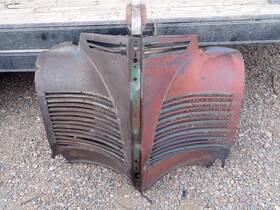
( Type: Grille ), ( Ipn: 1940 P8 P9 ), ( Vintage Part: Yes ), ( Country Of Origin: United States ), ( Placement On Vehicle: Front )
Review PLYMOUTH P8 P9 Deluxe Grille fits 1940
The **Plymouth 1940 P8 P9 Deluxe Grille** is a stunning and meticulously crafted emblem of mid-century automotive elegance, embodying the bold, distinctive character of the iconic 1940s Plymouth lineup. This grille is a masterpiece of chrome engineering, designed to exude both power and sophistication, reflecting the bold styling cues that defined American muscle cars of the era. The grille features a bold, horizontal bar configuration with a central medallion that proudly displays the legendary "Plymouth" script, flanked by two prominent vertical bars on either side, creating a striking, symmetrical focal point. The chrome finish is polished to a mirror-like sheen, catching the light with a luminous brilliance that accentuates its intricate details, while the overall design radiates a sense of boldness and confidence perfect for enthusiasts seeking to pay homage to the golden age of American automotive design.
Crafted with precision, the grille is built to withstand the test of time, offering not just aesthetic appeal but also durability. The robust construction ensures that it remains a centerpiece of any classic or custom vehicle, whether integrated into a meticulously restored 1940 Plymouth or mounted on a modern hot rod for a nostalgic touch. The vertical bars, slightly flared at the edges, add a dynamic sense of movement, while the horizontal bars create a rhythmic pattern that draws the eye inward toward the emblem. The overall width and depth of the grille give it a commanding presence, making it an instant conversation starter for anyone who appreciates the artistry of vintage automotive design.
Beyond its visual impact, the **Plymouth 1940 P8 P9 Deluxe Grille** is a nod to the engineering prowess of the era, where form and function were seamlessly blended. The grille s design not only served an aesthetic purpose but also played a functional role in early cooling systems, allowing air to flow efficiently through the radiator. Today, it stands as a testament to the craftsmanship of the past, offering collectors and customizers a way to preserve and celebrate the legacy of Plymouth s most iconic models. Whether displayed on a show car, a daily driver, or as part of a meticulously curated garage collection, this grille is more than just an accessory it is a piece of automotive history, ready to turn heads and spark admiration for generations to come.
### Pros and Cons of Buying a 1940 Plymouth P8/P9 Deluxe Grille
#### **Pros:**1. **Classic American Design** The 1940 Plymouth is a well-regarded example of early 1940s automotive styling, featuring a distinctive grille, rounded fenders, and a clean, streamlined appearance. It holds historical and aesthetic appeal for collectors and enthusiasts.
2. **Reliability and Simplicity** Early 1940s cars were built with straightforward mechanical designs, often using robust components like inline-six engines (common in the P8/P9) that are easier to repair than modern complex systems. Many parts are still available from aftermarket suppliers.
3. **Affordability Compared to Restored Classics** While not a bargain, a 1940 Plymouth in decent condition is generally more affordable than fully restored pre-war cars like Duesenbergs or Packards. This makes it accessible for hobbyists on a budget.
4. **Potential for Restoration or Driving** If the car is in drivable condition, it can be enjoyed as a weekend project or a nostalgic drive. Many owners appreciate the hands-on experience of working on a vintage vehicle.
5. **Community and Enthusiast Support** There is a dedicated community of vintage car enthusiasts who share knowledge, parts, and restoration tips. Clubs like the Plymouth Owners Club or general pre-war car forums can provide valuable resources.
6. **Lower Operating Costs (If Well-Maintained)** Gasoline engines from this era are relatively fuel-efficient by modern standards, and basic maintenance (oil changes, spark plugs) is inexpensive. However, this assumes the car is in good working order.
7. **Investment Potential** Properly restored or well-preserved examples can appreciate in value over time, especially if they are rare or have historical significance. The 1940 Plymouth is not extremely rare, but a clean, original example could be a sound investment for collectors.
---
#### **Cons:**1. **High Maintenance Requirements** Despite their simplicity, vintage cars require frequent attention. Rust, worn-out suspension components, and outdated electrical systems (like vintage wiring or carburetors) can be major challenges. Owners must be prepared for regular upkeep.
2. **Rust and Structural Issues** Many 1940s cars suffer from rust, particularly in the floor pans, frame rails, and wheel wells. A thorough inspection is essential to avoid purchasing a car with hidden structural damage that could be costly to repair.
3. **Limited Modern Comforts** The interior of a 1940 Plymouth will lack modern amenities such as power steering, power brakes, air conditioning, or even reliable heating. Driving comfort and convenience are significantly reduced compared to contemporary vehicles.
4. **Driving Experience Challenges** The car s handling, braking, and acceleration will be less responsive than modern standards. The lack of modern safety features (e.g., ABS, stability control) also makes it less safe for daily driving.
5. **Parts Availability and Costs** While some parts are still available, others may require custom fabrication or sourcing from specialty suppliers. Replacement parts for less common components (e.g., specific carburetors, gauges, or trim) can be expensive or difficult to find.
6. **Insurance and Registration Costs** Vintage cars often incur higher insurance premiums due to their age and potential liability risks. Additionally, registration fees for classic cars can be higher than for modern vehicles, depending on local regulations.
7. **Time-Consuming Projects** Restoring or even maintaining a 1940 Plymouth is a significant time commitment. Owners must be willing to dedicate hours (or years) to projects like bodywork, engine rebuilds, or electrical overhauls.
8. **Limited Practicality for Daily Use** Unless the car is in excellent condition, it is impractical for daily commuting due to reliability concerns, fuel efficiency (though better than some modern SUVs), and the lack of modern conveniences.
9. **Depreciation Risk** If the car is not restored or maintained properly, its value can decline rapidly. Poorly preserved examples may struggle to find buyers, leading to financial loss over time.
10. **Environmental and Legal Considerations** Older cars may not meet modern emissions standards, which could limit where they can be driven or require modifications. Additionally, some areas have restrictions on vintage cars without modern safety features.
---
### **Conclusion:**Buying a 1940 Plymouth P8/P9 Deluxe Grille can be a rewarding experience for an enthusiast who appreciates classic automobiles, enjoys hands-on restoration, and is prepared for the challenges of maintaining a vintage car. The car s historical significance, potential for appreciation, and the satisfaction of working on a piece of automotive history are major draws. However, the high maintenance costs, time investment, and practical limitations make it a poor choice for someone seeking a reliable, modern alternative.
This vehicle is best suited for:- **Enthusiasts** who prioritize the joy of restoration and driving a piece of automotive history.
- **Investors** who are willing to commit to preserving or restoring the car to high standards.
- **Owners with mechanical skills** or access to experienced mechanics who can handle the car s quirks.
For those who value convenience, safety, and low maintenance, a 1940 Plymouth is not a practical purchase. Instead, consider a modern classic (e.g., a 1970s muscle car or a well-preserved 1980s vehicle) or a restored vintage car if you still wish to own a piece of history with fewer headaches.
---
### **Recommendation:** If you are determined to buy a 1940 Plymouth, follow these steps to maximize your chances of success:1. **Inspect Thoroughly** Have a trusted mechanic or vintage car specialist inspect the car for rust, engine condition, and overall structural integrity. Look for signs of previous repairs that may have been done poorly.
2. **Prioritize Originality** If possible, seek out a car with as many original components as possible, especially the engine, transmission, and body. Originality increases value and authenticity.
3. **Budget for Restoration** Be prepared to allocate a significant budget for repairs, parts, and labor. A full restoration can cost tens of thousands of dollars, so ensure you can commit to the long-term project.
4. **Join Enthusiast Communities** Connect with groups like the Plymouth Owners Club or vintage car forums to learn from others experiences and find reliable sources for parts and advice.
5. **Consider a Drivable Project Car** If you re not ready for a full restoration, look for a car that is already running but needs cosmetic work. This allows you to enjoy driving it while gradually improving it.
6. **Avoid "Fixers"** Unless you have extensive experience, avoid purchasing a car that is in poor condition and requires extensive mechanical or bodywork. Start with a car that is closer to completion.
Ultimately, a 1940 Plymouth is a fantastic choice if you are passionate about vintage automobiles and willing to put in the effort. For everyone else, it may be more prudent to explore other options that balance nostalgia with practicality.
Details:
1940 Plymouth Deluxe P8 P9 Grille See pictures for condition. $50.00sin Continental US. I do not have the stainless moldings.
specifications grilexte:
- for makes: Plymouth
- for years: 1940
- type: Grille
- ipn: 1940 P8 P9
- vintage part: Yes
- country of origin: United States
- placement on vehicle: Front
shipping grilexte:
- transit: 3-8 Days
- type: Fixed
- class: Economy
- service: FedEx Ground Economy
- cost: $50.00
- carrier: FedEx
payments grilexte:
- credit card: Visa
- wallet: Google-pay
- other
general grilexte:
- Car Truck Parts Accessories > Exterior Parts Accessories > Grilles
- condition: Used
offer grilexte:
- quantity: 1
- started: February 17, 2026
- availability: In Stock
- sold: 0
- options: Ship-to-home
returns grilexte:
- policy: No Returns
seller grilexte:
- rating: 99.6%
- # reviews: 4544
- city: Longmont, Colorado
Plymouth Is Similar To:
- 1156651 Mopar Plymouth Large Upper Grill Grille Trim (42.4% similar) I suspect the packages got wet and disintegrated at some point. Then the part was moved around and has some scuffs scratches on it. I got this part in a lot of stainless parts. Part number about 20 inches long. It would need polishing for show. It would need polishing for show. This is a new part ...(June 11th, 2018)
- 1156656 Chrysler Corporation Plymouth Lower Rh Intermediate Chrome Grille Bar (32.7% similar) Lock: bin 3 GSR veers 837 gs being offered is a used right side lower intermediate grille bar I am selling spare parts from the restoration of my shipping and handling charges are quoted for USA only. Other countries, please inquire. The stainless should polish quite nice. This is the one to which ...(October 10th, 2018)
- 1156657 Chrysler Corporation Plymouth Lower Lh Intermediate Chrome Grille Bar (32.7% similar) The stainless should polish quite nice. This is the one to which park light attached. Other countries, please inquire. Shipping and handling charges are quoted for USA only. I am selling spare parts from the restoration of my being offered is a used left side lower intermediate grille bar...(October 10th, 2018)
- 1242636 Mopar Nos 1949 Plymouth Deluxe (42.3% similar) Pretty nice piece. Has hood latch and mounting brackets also bottom plate most still in attached to crime,n plates other steel show rust for age solid piece...(January 1st, 2017)
- 1434922 Mopar 1953 Plymouth Grille (44.8% similar) Please examine the pictures to get a clear understanding of condition this part. This part is open stock nos with no packaging. Shipping is free to Canada and the USA. It does have some shelf wear and light scratches as a result...(October 16th, 2017)
- 1494707 Plymouth Upper Left Outer Chrome Grille Bar Nos (43.2% similar) This chrome grille moulding is in extraordinary shape, but has a Minot ding from shelf wear that should't be too hard to press out behind. We took it out of the wrapper to take photo. Nice new old stock upper left outer grille bar for the 1954 plymouth...(March 7th, 2018)
- 1902 620 Mopar Plymouth Center Grille Medallion And Hood Lock Brace Sport (34% similar) All of the components this grille section are in pretty decent driver quality condition and only need cleaning some light repairs. Here offered is a vintage hood lock brace striker to yoke and grille section with medallion for 1959 plymouth. A very nice addition to your '59 restoration. This used ...(March 19th, 2018)
- 1903630 Plymouth Grille (53.6% similar) This grille is a bright grill. The Mopar parts book lists both dull finish or bright with serrations. This item is a used right side grille and lower moulding for 1959 Plymouth's. It is very straight. It is in very good used condition, with no apparent heavy scratches or cracks...(January 14th, 2019)
- 1903631 Mopar Nos Plymouth Lh Driverside Grille Bright Aluminum Serrations (37.4% similar) I cleaned it with some ultra fine steel wool, but could use a little more elbow grease to make really shine. If there are any questions, please m-f 11AM-6PM est. There is another version for that year has a dull and smooth finish. This version is bright with serrations as the parts catalog calls it...(November 14th, 2018)
- 1950-1960-1970-1980-1990-1999-1972-1968-1974-1964 1950-1960-1970-1980-1990-1999-1972-1968-1974-1964 Plymouth Chrome Grille Badge (21% similar) Chrome plated plymouth grille badge nice condition includes mounting hardware for grille about across please look at all photos...(December 5th, 2017)
- 2082184 Plymouth Valiant Lower Right Grille Surround Moulding Trim Oem (35% similar) That's why they are listed as used. Emblems, chrome, glass and etc are not included may be purchased separately. All parts are sold as is condition. Please verify this is the right part for your car shipping on some of these parts can be very expensive and it not cost effective to wallet have return...(July 3rd, 2018)