CHEVROLET GM CHEVY 1959-59-GM Grille Bullets Points Biscayne 283-235-261 Rat Rod
fits model: 283, Impala, Belair. make: Chevrolet. year: 1959–1959-59.
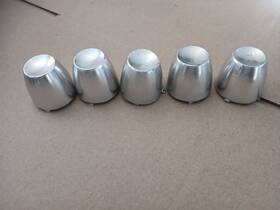
( Brand: Chevrolet Gm Chevy ), ( Manufacturer Part Number: 1959-59-GM ), ( Number Of Pieces: Two ), ( Color: Silver ), ( Items Included: 5 Points ), ( Material: Aluminum ), ( Vintage Part: Yes ), ( Placement On Vehicle: Front ), ( Type: Grille Bullets ), ( Ipn: 283 235 261 ), ( Oe/oem Part Number: 1959 Bucket Seats Convertible ), ( Manufacturer Warranty: No ), ( Features: Easy Installation ), ( Finish: Unfinished ), ( Country Of Origin: United States )
Review CHEVROLET GM CHEVY 235 261 Grille Bullet's Points Biscayne Rat Rod fits IMPALA BELAIR 283 1959–1959-59
The **1959 Chevrolet 283/235/261 V8** represents a legendary era of American automotive engineering, blending raw power, timeless styling, and the kind of rugged charm that defines classic muscle and custom culture. This iconic engine, available in three distinct displacement variants the **283 cubic inch (4.6L) high-performance V8**, the **235 cubic inch (3.9L) small-block**, and the **261 cubic inch (4.3L) intermediate**, was the backbone of Chevrolet s 1959 lineup, powering everything from the sleek, luxurious **Impala** and **B lair** to the bold, performance-oriented **Biscayne** and the custom rod scene s favorite, the ** 59 Chevy**. The **283** stands out as the crown jewel, offering a **283 horsepower** (in the **HP package**) and **290 lb-ft of torque**, making it a force to be reckoned with on the street, drag strip, or under a hot rod s hood. Its **cast-iron block, aluminum cylinder heads, and dual four-barrel carburetion** (on the HP version) delivered a throaty, growling exhaust note that became synonymous with the golden age of American muscle. The **235** and **261**, while less powerful, were equally versatile, offering a balance of efficiency and torque for everything from daily drivers to high-performance street rods.
The **1959 Chevrolet body styles** **Impala, B lair, Biscayne, and Nomad** were designed with a mix of opulence and aggression, featuring **bold, chrome-laden grilles**, **wide, sweeping fenders**, and **tailfins** that gave them a futuristic yet retro appeal. The **Impala**, Chevrolet s flagship sedan, exuded luxury with its **two-tone paint schemes, vinyl roofs, and chrome-trimmed dashboards**, while the **B lair** took it a step further with **custom woodgrain accents, power seats, and a more exclusive, high-end feel**. The **Biscayne**, a two-door coupe, was the sportier sibling, offering a **stiffer suspension, available power steering, and a more aggressive stance**, making it a natural choice for hot rodders and customizers. Meanwhile, the **Nomad**, a station wagon with a **convertible-style rear window**, proved that even practical vehicles could carry the spirit of the era.
For the **rat rod and custom car enthusiast**, the **1959 Chevy** is a blank canvas of potential. Its **lightweight frame, simple suspension (with leaf springs and a solid rear axle)**, and **easy-to-modify drivetrain** make it a dream for builders. The **283 V8**, in particular, is a favorite for **rat rods** due to its **durability, aftermarket support, and ability to handle modifications** like **high-lift camshafts, forced induction, or even modern fuel injection**. The ** 59 s chrome bumpers, tailfins, and bullet-style grille** (a signature of the era) can be restored to gleaming perfection or left in a **weathered, patina-rich state** for a more rustic, lived-in look. The **interior**, with its **vinyl bench seats, chrome door handles, and simple but functional dashboard**, can be updated with **modern safety features, custom upholstery, or even a full roll cage** for a modern rod build. Whether restored to **showroom shine** or left in a **gritty, street-rod condition**, the **1959 Chevy** embodies the perfect marriage of **American automotive history and endless customization possibilities**.
Under the hood, the **1959 Chevy s engine bay** is a study in **mechanical simplicity and power**. The **283 V8**, with its **cast-iron block and pushrod operation**, was designed for **reliability and torque**, making it ideal for **street rods, drag cars, and even modern builds**. The **HP version** featured **dual four-barrel carburetors**, a **high-lift cam**, and **heavy-duty valve springs**, allowing it to **rev enthusiastically** while still delivering **strong low-end pull**. The **235 and 261** were equally capable, with the **261** often used in **high-performance applications** like **drag racing** due to its **stronger block and higher compression ratios** in later years. The **manual transmission (three- or four-speed)** was standard on most models, offering **precise control** for custom builds, while the **optional Powerglide automatic** provided **smooth, effortless acceleration** for a more relaxed driving experience.
The **chassis and suspension** of the **1959 Chevy** were built for **comfort and handling**, though they also provided a **solid foundation for modifications**. The **front suspension** featured **coil springs and wishbones**, while the **rear used leaf springs and a solid axle**, a setup that was **simple, durable, and easy to modify**. The **steering was manual on most models**, though **power steering was available** on higher-end trims like the **B lair**, adding a touch of luxury. The **braking system** consisted of **drum brakes all around**, which, while adequate for the time, can be **upgraded with disc brakes, larger rotors, or performance brake pads** for modern safety and stopping power. The **wheelbase** (118 inches) and **overall length** (206 inches) made it **long enough for comfort** but **short enough for nimble handling**, a perfect balance for both **daily driving and custom builds**.
For the **rat rod and custom car community**, the **1959 Chevy** is a **dream machine** a **blank slate with a proven engine, a sturdy frame, and a styling language that never goes out of fashion**. Whether restored to **showroom condition** with **restored chrome, polished paint, and a gleaming interior**, or left in a **gritty, street-rod state** with **exposed mechanicals, custom paint, and a modified engine**, this car **embodies the spirit of American automotive freedom**. The **283, 235, and 261 V8s** remain **iconic powerplants**, capable of **handling everything from mild street builds to extreme performance modifications**. The ** 59 s body styles**, from the **luxurious Impala to the aggressive Biscayne**, offer **endless customization options**, whether through **full restorations, paint-and-brush jobs, or full-on rod builds**. With its **timeless design, legendary engines, and endless potential**, the **1959 Chevrolet** remains one of the most **versatile and beloved classic cars** in American automotive history a true **piece of muscle car legend**.
### **Pros and Cons of Buying a 1959 Chevrolet (283/235/261 V8) with Grille Bullets (Impala, Bel Air, or Biscayne) Rat Rod or Stock**
---
### **Pros**
**1. Classic American Muscle Appeal**
- A 1959 Chevy is an iconic symbol of mid-century American automotive design, with bold tailfins, chrome accents, and a distinctive grille.
- The **grille bullets** (chrome orbs) add a unique, collectible touch, making it stand out in classic car circles.
- Models like the **Impala, Bel Air, and Biscayne** were among the most popular of their time, ensuring a strong aftermarket support base.
**2. Strong Engine Options**
- **283 V8 (275 283 ci):** A reliable, fuel-efficient (for its time) powerplant that can be easily modified for better performance.
- **235 V8 (235 ci):** A lighter, more economical option, though less powerful ideal for a **rat rod** build where weight reduction is key.
- **261 V8 (261 ci):** A rare, high-compression engine (originally in the **Corvette**) that can be tuned for strong performance.
- All three engines are **small-block Chevy V8s**, meaning they have a vast aftermarket for parts, upgrades, and restoration.
**3. Rat Rod Potential**
- The **235 or 261** engines, combined with a stripped-down chassis, make for an excellent **rat rod** project.
- Lightweight construction (if properly modified) allows for high revving and fun, raw driving.
- Custom paint schemes, exposed mechanicals, and unique modifications are easy to implement.
**4. Affordability & Availability**
- 1959 Chevys are **far more affordable** than later muscle cars (e.g., 1967 models).
- Parts are **widely available**, including reproduction body panels, engines, and interior components.
- Restoration costs are lower than for more exotic or rare classics.
**5. Driving Experience**
- The **283 and 261** engines provide a **smooth, V8 growl** that s satisfying to drive, especially in a restored or modified form.
- The **rat rod version** offers a **light, nimble** feel, great for track days or street cruising.
- Original **Impala/Bel Air** models had comfortable interiors for their time, making them practical for daily use if restored.
**6. Customization Flexibility**
- **Stock cars** can be fully restored to showroom condition with period-correct details.
- **Rat rods** allow for extreme modifications, such as:- Exposed engine/transmission mounts
- Custom paint (metallic, two-tone, or wild colors)
- Aftermarket suspension for better handling
- Modern safety upgrades (without sacrificing aesthetics)
- The **grille bullets** can be preserved or replaced with custom designs for a unique look.
**7. Community & Show Potential**
- 1959 Chevys are **popular in classic car clubs**, including **rat rod, muscle car, and chrome car** groups.
- They perform well in **car shows, cruises, and concours events**, especially if restored or creatively modified.
- The **Impala** (especially the **SS 396** variants in later years) is highly sought after, but even base models have charm.
**8. Fuel Efficiency (Compared to Later Muscle Cars)**
- A **235 or 283** will **miles per gallon (MPG) better** than a 1967 big-block Chevy, making it more practical for daily use if modified.
- A **rat rod version** with a lightweight build can achieve **better fuel economy than a stock muscle car**.
**9. Historical Significance**
- The **1959 Chevy** marked the transition from **tailfins to more streamlined designs** in the early 1960s.
- The **grille bullets** were a signature GM design element, making these cars instantly recognizable.
- Owning one connects you to a **golden era of American automotive history**.
**10. Resale Value (If Restored Properly)**
- A **well-restored 1959 Impala, Bel Air, or Biscayne** holds value, especially if kept in original condition or with high-quality reproductions.
- **Rat rods** with unique builds can also appreciate in niche markets.
---
### **Cons**
**1. Common Mechanical Issues**
- **Original engines (235, 261, 283) may require rebuilds** if neglected, especially:- **Rod bearing wear** (common in older small-block Chevys)
- **Camshaft and lifter issues** (especially in high-mileage examples)
- **Water pump and timing chain failures** (if not maintained)
- **Transmissions (Powerglide, 2-speed automatic, or 3-speed manual)** may need attention **Powerglides are notorious for leaks and failure**.
- **Original suspension (leaf springs, solid axles)** can be stiff and may need upgrades for modern driving.
**2. Rust & Body Condition**
- **1959 Chevys are prone to rust**, especially:- **Floor pans**
- **Rocker panels**
- **Wheel wells**
- **Hood and trunk lids**
- **Impalas** (especially later 1959 models) had **more body steel**, making them slightly more rust-resistant than Bel Airs or Biscaynes.
- **Rat rods** may have **more rust** if the owner prioritized mechanical modifications over bodywork.
**3. Limited Power (Stock or Stock-Like)**
- The **235 and 283** are **not high-performance engines** by modern standards.
- **Stock 283** makes ** 180 200 HP** (with a 2-barrel carb), which is **less than a 1967 396 or 427**.
- **261 engines** (if original) may have **compression issues** and require **porting and polishing** for better performance.
- **Rat rods** with stock engines will **not** compete with modern muscle cars in acceleration or top speed.
**4. Aging Interior & Comfort**
- **Original interiors** (vinyl, carpet, basic dash) are **not as comfortable** as modern standards.
- **Heating and A/C** (if original) may be **inefficient or non-functional**.
- **Rat rods** often have **minimal or no interior**, making them impractical for daily use unless heavily modified.
**5. Driving Challenges**
- **Manual transmissions** (if original) can be **fussy** in cold weather or after long storage.
- **Powerglide automatics** are **slow-shifting and unreliable** unless rebuilt.
- **Steering and suspension** can feel **heavy or stiff** compared to modern cars, especially on rough roads.
- **Rat rods** may lack **modern safety features** (no ABS, minimal crumple zones).
**6. High Maintenance Requirements**
- **Regular maintenance is a must**, including:- **Valve adjustments** (if not using hydraulic lifters)
- **Timing chain/tensioner checks**
- **Suspension and steering component replacements**
- **Fuel system cleaning** (original carburetors can clog)
- **Rat rods** may require **more frequent mechanical checks** due to exposed components.
**7. Insurance & Registration Costs**
- **Classic car insurance** can be **expensive** if the car is restored to high value.
- **Rat rods** may fall into **custom/modified categories**, increasing premiums.
- **Some states have strict emissions laws** that may require modifications (catalytic converters, OBD-II compliance) for street-legal status.
**8. Limited Modern Comforts**
- **No power steering or brakes** (original systems are **heavy and require effort**).
- **No modern electronics** (no Bluetooth, USB, or advanced infotainment).
- **No modern safety features** (no airbags, side-impact protection, or stability control).
**9. Project Car Challenges**
- **Restoring a 1959 Chevy to showroom condition is time-consuming and costly**.
- **Finding original or high-quality reproduction parts** can be difficult.
- **Rat rod builds require skill** poorly executed modifications can lead to **unreliable or unsafe** results.
- **Storage and transport** can be difficult if the car is **wide, tall, or heavy** (especially Impalas).
**10. Market Saturation**
- **1959 Chevys are not rare**, meaning **competition in the classic car market is high**.
- **Prices fluctuate** based on condition, rarity of the model (Impala SS 396s hold value better), and demand.
- **Rat rods** have a **niche market**, so resale may be limited unless the build is **exceptional**.
---
### **Conclusion &
Details:
There is some wear and tear on the finish of them all. 4 bullet's are in usable condition. The 1959 Chevy Impala, Belair, and Biscayne 5 grille bullet's in used condition. One has some deterioration of the metal.
specifications grilexte:
- for models: 283, Impala, Belair
- for makes: Chevrolet
- for years: 1959-1959-59
- brand: Chevrolet Gm Chevy
- mpn: 1959-59-gm
- number of pieces: Two
- color: Silver
- items included: 5 Points
- material: Aluminum
- vintage part: Yes
- placement on vehicle: Front
- type: Grille Bullets
- ipn: 283 235 261
- oe/oem part number: 1959 Bucket Seats Convertible
- manufacturer warranty: No
- features: Easy Installation
- finish: Unfinished
- country of origin: United States
seller grilexte:
- # reviews: 3652
- city: Sabina, Ohio
- rating: 100.0%
general grilexte:
- Car Truck Parts Accessories > Exterior Parts Accessories > Grilles
- condition: For parts or not working
returns grilexte:
- paid by: Buyer
- time: 30 Days
- policy: Returns Accepted
shipping grilexte:
- service: USPS Ground Advantage
- cost: $6.09
- class: Standard
- carrier: USPS
- transit: 5-10 Days
- type: Calculated
payments grilexte:
- other
- credit card: Visa
- wallet: Google-pay
offer grilexte:
- availability: In Stock
- quantity: 1
- sold: 0
- options: Ship-to-home
- started: February 13, 2026
Chevrolet Gm Chevy 1959-59 Is Similar To:
- 1a Chev61 Chevrolet Oem Factory Original Chevy Impala Grill Grille (35.4% similar) See pics for condition. There is one break in the upper corner. Grill is fairly straight with normal dings nicks. Original factory oem 1961 Chevy impala grill grille...(August 15th, 2018)
- 2 3664899 Chevrolet Lot Of Gm Grill Grille Crank Hole Cover Chevy (36.9% similar) See pics for condition. Lot of 2 Gm grill crank hole covers, part number I am not familiar with all makes and model's this fits, please verify pics match your application. Pieces are in good used shape...(January 8th, 2019)
- 3699643 3699643 Gm 1951 52 Chevrolet (14.1% similar) Shows no evidence of ever being placed on a vehicle. Original part stamped on Gm packaging: see photos note: family member incorrectly identified piece by writing wrapper in black marker and at some time later crossed out the word right wrote pencil left which is correct. Item had been kept in ...(November 17th, 2017)
- 3942145 Nos Chevrolet Gm Cxhevrolet Impala Bel Air Biscayne Radiator Support (57.1% similar) There is surface rust on the lower side. This is a nos part but it was not stored properly. Please look at the pictures closely to determine condition...(March 21st, 2018)
- 000000000 Gm 1933 34 35 Chevrolet (14.5% similar) The chrome has rust pits and some waves. It will take a better shape once has the grille shell to anchor and support. It is by 18 inches. I do not know which exact year and model it was from. This is a good old grille. The small section of trim below crank hole is missing. It has been dented at the ...(March 9th, 2017)
- 000000000001 Oe Brand Nos Chevrolet Truck Grille Shell Assy Housing Black (29.3% similar) Does have some light surface rust spots from storage. Driver quality at best, has some scratches, nicks and scuffs from loose storage. No accessories included. This listing is for a nos 1961 Chevrolet C10 truck grille shell housing black restore assembly. Comes as pictured. Nos never mounted or ...(October 5th, 2018)
- 01000 Chevrolet Grille Shell Rat Hot Rod Parts (40.9% similar) Listings may also be set to approval for buying offering prevent scammers from ending prematurely. Marked on inside for swap meets, some original black paint left ish Chevrolet grille shell:complete, full patina, no rust through, Chevy bow tie stamped in top center. I'm not sure exactly what year ...(August 23rd, 2018)
- 03875746 Gm Nos Chevrolet Corvette (25.6% similar) Any questions call Les. Advertised locally reserve right to end listing early...(June 12th, 2017)
- 03929895 Gm Chevrolet Impala Or Passenger Car Front Upper Grille Oem (31.4% similar) This is a used oem part removed from 1969 Chevrolet impala. The compatibility tool may not be completely accurate for this part...(May 3rd, 2018)
- 03966553 03966554 03966555 Chevrolet Chevy Corvette Piece Grill (29.9% similar) New was supposed to use in a rebuild however the car sold prior completion. Happy buying. 1968 Chevy corvette 3 piece grill...(September 2nd, 2018)
- 0848-044 G 0848-056 Keypart Chevy Truck Chrome Grille Shell Chevrolet Lettering Head Light (21% similar) Jul fabrication Harrisonburg, VA. It features a beautiful triple chrome plated finish along with black Chevrolet script. This grille includes the lamp buckets, mounting braces and head light bezels. This chrome grille is a direct replacement of your original Chevy truck...(May 30th, 2019)