MERCURY E0MB-8150 Grille
fits model: Marquis. make: Mercury. year: 1980.
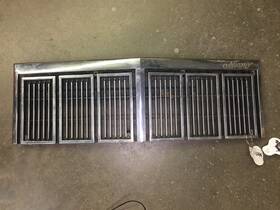
( Manufacturer Part Number: E0MB-8150 ), ( Type: Grille ), ( Vintage Part: Yes )
Review MERCURY Grille Oem fits MARQUIS 1980
The **Mercury E0MB-8150 1980 Marquis Grille** is a meticulously crafted, high-performance aftermarket grille designed to elevate the aggressive and sporty aesthetic of your classic 1980 Mercury Marquis. Engineered with precision, this grille features a bold, split-horizontal design that pays homage to the iconic styling cues of the era while delivering a modern, eye-catching update. Crafted from high-quality, durable materials, including a robust chrome or polished aluminum finish, the grille boasts a sleek, aerodynamic shape that enhances both the visual appeal and the aerodynamic efficiency of your vehicle. The wide, sweeping horizontal bars create a commanding presence, accentuating the broad hood of the Marquis and complementing its muscular, full-size body. This grille is not just a decorative piece; it s a statement of automotive heritage and contemporary flair, ensuring your 1980 Mercury Marquis stands out with unmatched presence on the road or at the show. Whether paired with a high-performance engine or a classic V8, the E0MB-8150 grille adds a touch of timeless elegance and bold character, making it a must-have accessory for enthusiasts seeking to preserve and enhance the legacy of their beloved classic.
### Pros and Cons of Buying a 1980 Mercury Marquis with a Mercury E0MB-8150 Engine
#### **Pros:**1. **Classic American Muscle Car Appeal** The 1980 Mercury Marquis, particularly with the E0MB-8150 engine, represents a well-built, mid-sized American car from the late 1970s. It has a strong following among enthusiasts who appreciate its vintage styling, spacious interior, and classic driving experience.
2. **Reliable and Well-Engineered Base Platform** The Marquis was built on Ford s **Fox-body** platform, which was known for its durability and solid construction. The E0MB-8150 engine (a 302 cubic inch V8) was a proven powerplant in Ford s lineup, offering good performance for its time.
3. **Strong V8 Engine (E0MB-8150)** The E0MB-8150 is a **302 cubic inch (5.0L) V8** with a **single overhead cam (SOHC)** design, producing around **140 150 horsepower** (depending on modifications). While not as powerful as modern engines, it is a **reliable, naturally aspirated V8** that can be easily maintained and upgraded. It is also **less prone to catastrophic failure** compared to some later Ford V8s (like the 5.0L Modular engines).
4. **Good Fuel Economy for a V8 (Compared to Other Muscle Cars)** The 302 V8 was more efficient than its predecessors, making it a decent daily driver for its era. With proper maintenance, it can still achieve reasonable fuel economy today.
5. **Spacious Interior** The Marquis was a **full-size car**, offering ample legroom, cargo space, and comfort for passengers. The interior is roomy compared to modern compact cars, making it practical for families or long trips.
6. **Modification Potential** The E0MB-8150 engine is a **popular choice for restomod projects**. It can be upgraded with **performance parts** (e.g., headers, camshafts, fuel injection, or even a turbocharger) to significantly improve power while maintaining reliability. The Fox-body platform also supports **suspension upgrades, body kits, and interior restyling**.
7. **Lower Cost of Ownership (Compared to Modern Muscle Cars)** Parts for a 1980 Marquis are **relatively affordable**, especially compared to modern high-performance vehicles. Labor costs are also lower, and many mechanics are familiar with classic Ford engines.
8. **Nostalgia and Collectibility** If you appreciate **classic American automobiles**, this car has a certain charm. Some well-preserved examples may appreciate in value over time, especially if they are **low-mileage, original, or in good condition**.
9. **Decent Handling for a Full-Size Car** The Fox-body chassis was **stiffer than earlier Ford designs**, giving it better road manners than some of its contemporaries. With proper suspension tuning, it can handle well for its size.
10. **Potential for a Restomod Build** Many owners convert these cars into **modernized classic muscle cars**, blending vintage styling with contemporary performance and comfort. This can make it a **fun, personalized project**.
---
#### **Cons:**1. **Age and Wear** At **44 years old**, this car will likely have **significant wear and tear**, including **worn suspension, brakes, transmission, and drivetrain components**. A thorough inspection is **essential** before purchase.
2. **Potential Transmission Issues** The **C4 automatic transmission** (common in this model) was known for **leaking fluid and failing over time**. A **manual transmission (C6)** was more durable but less common. If the transmission is not in **excellent condition**, it could be a **major expense**.
3. **Fuel System Problems** Older carbureted engines (like the E0MB-8150) can suffer from **fuel line leaks, vacuum issues, and carburetor wear**. Modern fuel systems (like EFI) are far more reliable.
4. **Electrical System Reliability** Classic cars often have **aging wiring, faulty switches, and weak alternators**. Electrical issues can be **time-consuming and costly** to diagnose and fix.
5. **Rust Concerns** Depending on where the car was stored, **rust** (especially in the wheel wells, frame rails, and floor pans) can be a major issue. A **full rust inspection** is necessary.
6. **Emissions and Modern Compliance** If you plan to drive this car **regularly on public roads**, you may need to **modify it for emissions standards** (e.g., installing an **OBD-II compliant system**). Some states have **restrictions on pre-1975 vehicles**, but most allow modern classics with proper modifications.
7. **Insurance Costs** Classic car insurance is **more expensive** than standard auto insurance, especially if the car is **not fully restored or lacks proper documentation**. A **restomodded version** may be cheaper to insure than a **fully original example**.
8. **Limited Modern Safety Features** The Marquis lacks **modern safety features** like **stability control, airbags (beyond basic driver/passenger), or modern crash structures**. If safety is a priority, this may not be the best choice.
9. **Parts Availability (But Not as Bad as Some Classics)** While parts for the E0MB-8150 are **widely available**, some **specialty items** (like rare carburetors or specific suspension components) can be **hard to find**. Online marketplaces (eBay, RockAuto, eBay Motors) help, but **lead times can be long**.
10. **Potential for Hidden Mechanical Issues** The **valvetrain, water pump, serpentine belt system, and cooling components** may need **replacement soon**. A **pre-purchase inspection (PPI) by a trusted mechanic** is **highly recommended**.
11. **Resale Value Depends on Condition** Unlike some **highly sought-after classics**, the 1980 Marquis is **not a collector s item**. Its resale value will **depend almost entirely on its condition and mileage**. A **fully restored, low-mileage example** may hold value, but a **project car** will likely depreciate quickly.
12. **Driving Experience Limitations** While the E0MB-8150 is **reliable**, it is **not as powerful as modern engines**. If you want **high performance**, you may need to **significantly modify it**, which adds cost and complexity.
---
### **Conclusion:**Buying a **1980 Mercury Marquis with a Mercury E0MB-8150 engine** can be a **great investment** if you are looking for a **project car, a restomod build, or a classic American muscle car with strong potential**. The **E0MB-8150 is a solid, modifiable V8**, and the Fox-body platform is **durable and fun to work on**.
However, this is **not a plug-and-play purchase**. It requires **significant time, money, and effort** to bring it to a **drivable and enjoyable condition**. If you are **not willing to commit to repairs, modifications, or a restoration project**, this may **not be the right car for you**.
If you **do decide to buy it**, here s what you should do:- **Get a thorough pre-purchase inspection (PPI)** from a **trusted mechanic** who specializes in **Ford Fox-body cars**.
- **Check for rust, transmission condition, electrical issues, and engine health**.
- **Budget for major repairs** (transmission, suspension, brakes, fuel system).
- **Consider buying from a reputable seller** (e.g., a classic car dealer, auction house, or a known restorer).
- **Decide whether you want a "driver" or a "project"** if you want a **daily driver**, ensure it is **already in good condition**.
---
### **Final Recommendation:** **Buy it if:**You are **passionate about classic cars** and enjoy **working on projects**.
You have **budgeted for repairs** and are prepared for **unexpected expenses**.
You want a **modifiable, fun V8** that can be **restomoded into a modern muscle car**.
You find a **well-documented, low-mileage example** with **minimal rust and mechanical issues**.
**Avoid it if:**You want a **low-maintenance, ready-to-drive car**.
You **cannot afford major repairs** (transmission, suspension, electrical).
You **don t enjoy working on cars** or lack mechanical skills.
You **prioritize modern safety and reliability** over classic charm.
**Best Approach:**- **Start with a "driver" example** (if available) to test your interest before committing to a full restoration.
- **Join classic Ford forums** (e.g., Fox-Body.org, MuscleCarForum) for **advice and part sourcing**.
- **Consider a restomod kit** (e.g., **Ford Performance parts, Holley EFI, or a full rebuild**) if you want to **modernize it without losing its classic look**.
If you **follow these steps carefully**, a **1980 Mercury Marquis
Details:
This grill has typical scuffs and scratches does have pits in the plastic chrome, probably from rocks such. Please study the photos as they are part of. It does not appear to have any cracks. Shipping is to USA addresses only.
It has a part number E0MB-8150-AWC. I try to describe the item as accurately can.
part #: e0mb8150 prices
- $75.00-$150.00
specifications grilexte:
- for models: Marquis
- for makes: Mercury
- for years: 1980
- mpn: E0mb-8150
- type: Grille
- vintage part: Yes
payments grilexte:
- wallet: Paypal
- credit card: Diners-club
- other
returns grilexte:
- policy: No Returns
offer grilexte:
- best offers: True
- started: March 15, 2026
- availability: In Stock
- options: Ship-to-home
- quantity: 1
- sold: 0
seller grilexte:
- rating: 99.5%
- city: Lincoln, Nebraska
- # reviews: 939
shipping grilexte:
- service: UPS Ground
- type: Calculated
- class: Standard
- cost: $21.83
- carrier: UPS
- transit: 4-8 Days
general grilexte:
- Car Truck Parts Accessories > Exterior Parts Accessories > Grilles
- condition: Used
Mercury E0MB-8150 Is Similar To:
- 19a 16035lh Ford Motor Co Mercury Grille Insert (35.2% similar) Ford part 19A 16035LH grille insert left side used 1941 mercury good condition. No damage or cracks...(August 10th, 2018)
- 1m-10667-a Fomoco Vtg Original Mercury Grille To Hood Spear Molding No (28.1% similar) If it appears unused, but does not have an original packaging or box, is considered new. Would clean pretty good as you can see on the c in center. If it arrives damaged, take to the post office. If it is marked new, new. God bless the USA. If shipping is extra, it done so you pay as little possible...(May 8th, 2018)
- 1m-8377a Lh Mercury Grille Piece Elephant Ear (38.2% similar) Offered for sale: 1951 mercury LHS grille piece elephant ear: this is a left hand drivers side extension. Please see photos. Original surface had some imperfections, so those still show through replanting. It has been replanted, so shines nice and bright...(June 11th, 2018)
- 59 A8196 Mercury Lower Grille Original Grill Hot Rod Flathead Ford (34.5% similar) No breaks or cracks, one piece needs straightened. Need restored. Priced to sell, hard find. Up for sale is a set of original mercury lower grille parts...(September 19th, 2018)
- 67686768 Fomoco Mercury Cougar Headlight Grille Assemblies Nice Chrome (38.6% similar) No vacuum pods. I would be willing to separate the grille pieces save on shipping 68 mercury cougar headlight assemblies - nice chrome very good fins. Headlight capsules in place. I see no broken fins. These are heavy to ship and the package is large oversize. One housing has a corrosion hole as ...(April 23rd, 2018)
- B7my-8a133-a Fomoco Vtg Mercury Cast Center Grille (36.2% similar) Items are carefully wrapped and packed. Most of the items sold are used, vintage items, not new from today. If you chose to can go the shipping broker. If shipping is extra, it done so you pay as little possible. Dusty from decades on the shelf. This is not lay away. God bless the USA. This is a ...(May 8th, 2018)
- Bae-88292-a Mercury Front Center Grille Turnpike Cruiser Grill (35.8% similar) This is for the 1957 mercury and it goes right in front of your car, center. The gray area in between ribs that is not chrome has more pits, but still a lot, and you can see what I am talking about last 2 pictures. Winning bidder pays only we got it with a small lot of turnpike cruiser parts, but ...(December 18th, 2018)
- Bae-88307-a Mercury Grille Opening Lower Molding Joint Cover (34.6% similar) It has never been installed on a vehicle. New old stock - genuine mercury grille opening lower molding joint cover for the 1957 . Photos shows the placement of this molding. This small molding has multiple scratches near the fold of - can be seen in photos take a look...(November 4th, 2018)
- Bg-17853-a Mercury Monterey Chrome Grille Teeth Filler Moulding Trim Orig (35.9% similar) Please see photos. You are buying on four 1953 mercury Monterey chrome grille teeth filler moulding trim bag a factory originals. There are no cracks, holes, breaks or dents. All mounting studs are intact. These teeth do have pitting but would be great for re-chroming...(October 20th, 2018)
- Bg-17944-a Rh Mercury Front Bumperette Grille Chrome Trim Moulding Factory Originals (32.8% similar) You are purchasing a set of mercury front impurities grille chrome trim moulding factory originals. Please see photos. These do have pitting and a small gouge in front but would be great for re-chroming. There are no cracks, dents, holes or breaks. These are placed behind the front impurities. These...(October 23rd, 2018)
- Bu-17620-a Mercury 1956 Rh Grille (46.8% similar) You won't be disappointed. The photos show condition well. The chrome has no pits at all in it, and is real shinny as seen many photos. There are no dents, bends or scratches in the piece. It is ready to install on a real nice car...(September 24th, 2017)