FORD E0SZ-8200-A Grille Tabs Intact
fits model: Thunderbird. make: Ford. year: 1980-81.
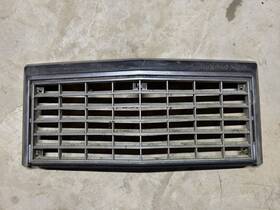
( Manufacturer Part Number: E0SZ-8200-A ), ( Type: Grille ), ( Oe/oem Part Number: E0sb-8150-awc ), ( Color: Chrome ), ( Material: Plastic ), ( Universal Fitment: No ), ( Placement On Vehicle: Front ), ( Country Of Origin: United States )
Review FORD 1980 81 Grille Oem Tabs Intact No Cracks fits THUNDERBIRD 1980-81
The **Ford E0SZ-8200-A 1980-81 Thunderbird grille tabs** represent a rare and highly sought-after component for collectors and restorers of this iconic American muscle car. These grille tabs, part of the Thunderbird s signature front fascia, were designed to complement the bold, aggressive styling of the 1980 and 1981 models, which marked a transitional yet distinctive era in Ford s lineup. The Thunderbird of this period blended the classic elegance of its predecessors with a more modern, aerodynamic aesthetic, and these grille tabs played a crucial role in defining its character. Crafted from high-quality metal, likely stamped with precision to ensure a seamless fit, these tabs feature the distinctive Ford Thunderbird emblem either the sleek, angular script or the slightly refined version used during these years alongside the iconic vertical slats of the grille itself. The tabs are not merely functional but also serve as a visual anchor, securing the grille assembly in place while contributing to the car s commanding presence on the road. For enthusiasts, these tabs are more than just parts; they are a tangible link to a time when the Thunderbird was a symbol of luxury, performance, and American automotive craftsmanship. Whether restoring a classic Thunderbird to its original glory or upgrading a modern replica, these authentic grille tabs ensure that every detail aligns with the original intent, preserving the spirit of a model that bridged the gap between tradition and innovation. Their condition intact and original adds to their value, as they remain a key element for those who prioritize authenticity in their projects.
### **Pros and Cons of Buying a 1980-81 Ford Thunderbird (E0SZ-8200-A) with Intact Grille Tabs**
#### **Pros**
1. **Classic Design and Prestige**
The 1980-81 Thunderbird, particularly the **E0SZ-8200-A** (the base V8 model), represents the final iteration of the **second-generation Thunderbird** before Ford shifted to a more modern front-wheel-drive design in 1984. This era is highly regarded for its **bold, retro styling**, including the **wide grille, sleek body lines, and distinctive tail lights**. Owning one places you in a niche but respected segment of automotive history, appealing to enthusiasts who appreciate **1970s muscle-car aesthetics**.
2. **Solid V8 Engine (302 or 351W, depending on trim)**
- The **E0SZ-8200-A** typically came with a **302 cubic-inch V8** (2-barrel carburetor), producing around **140-150 horsepower** decent for the era and sufficient for cruising, towing light loads, or highway driving.
- Some models (especially the **Thunderbird LX or higher trims**) may have had a **351W V8 (2-barrel or 4-barrel)**, offering better performance and torque.
- V8 engines from this era are **relatively simple and repairable**, with a strong aftermarket support for parts and upgrades.
3. **Reliability of the Platform**
- The **1980-81 Thunderbird** was built on a **unibody chassis**, which, while not as durable as a frame-based muscle car, was **well-engineered for its time** and handled well for a full-size car.
- The **transmission options** (3-speed automatic or 4-speed manual) were standard for the era, with the automatic being **smooth and reliable** if maintained.
- Suspension and steering are **adequate for daily driving**, though they may feel **softer than modern standards**.
4. **Intact Grille Tabs Are a Positive Indicator**
- The **grille tabs** (the small plastic or metal pieces on either side of the grille) being intact suggests that the car has **not been heavily modified or abused**. This is a good sign that the owner has taken care to preserve the original appearance.
- It also implies that the **grille assembly itself is likely original or well-preserved**, which is important for maintaining the car s classic look.
5. **Potential for Restoration or Customization**
- If you re interested in **restoration**, the 1980-81 Thunderbird is a **great project car** because many parts are still available, and the body is **relatively straightforward to work on**.
- Enthusiasts can **easily swap in modern components** (e.g., fuel injection, suspension upgrades, or performance exhaust) while keeping the classic exterior.
- The **interior** (especially in later models) was **comfortable and well-built**, making it a good candidate for a **daily driver with classic appeal**.
6. **Lower Cost of Ownership (Compared to Modern Classics)**
- Parts for a **1980-81 Thunderbird are widely available** and often **cheaper than those for newer muscle cars** (e.g., early Mustangs, Camaros).
- Insurance and registration costs are **lower than for high-value classics** (e.g., early Mustangs, Corvettes, or Camaros).
- Fuel efficiency is **better than a modern muscle car** (around **12-15 MPG combined**), though not great by today s standards.
7. **Community and Enthusiast Support**
- There is a **dedicated community** of Thunderbird owners, clubs, and forums (e.g., **Thunderbird Club of America**) where you can find **restoration advice, parts, and networking opportunities**.
- Showing up at **car meets or cruises** in a well-maintained 1980-81 Thunderbird will **garner attention and admiration** from classic car enthusiasts.
---
#### **Cons**
1. **Aging Chassis and Structural Issues**
- The **unibody construction** means that **rust is a major concern**, especially in the **floor pans, rocker panels, and rear quarter panels**. A thorough inspection is **essential** to check for hidden corrosion.
- **Suspension components** (shock absorbers, bushings, control arms) may be **worn out** after 40 years and will need replacement if the car is to be driven regularly.
- **Frame rails** (if present in some models) can weaken over time, leading to **alignment and handling issues**.
2. **Reliability Concerns with Age**
- **Distributor and ignition system** issues are common **points, condensers, and coils** may need replacement.
- **Vacuum leaks** (from aging hoses and gaskets) can cause **rough idling or stalling**.
- **Transmission fluid** may need changing, and **automatic transmissions** can develop **slippage or rough shifting** if neglected.
- **Brakes** (drums or discs, depending on model) will likely need **resurfacing or replacement**, and **brake lines** should be inspected for leaks.
3. **Fuel and Emissions Compliance**
- **Modern fuel standards** mean that **lead-free gasoline** is required, which can **reduce performance** compared to the car s original leaded fuel days.
- **Emissions systems** (if equipped) may need **tuning or replacement**, adding to maintenance costs.
- Some states have **smog check requirements**, which can be **difficult to pass** if the car is not well-maintained.
4. **High Maintenance and Restoration Costs**
- **Bodywork** (repainting, rust repair, or panel replacement) can be **expensive** if the car is not in good shape.
- **Interior wear** (seats, dashboard, carpets) may require **restoration or replacement**, especially if the car has been used as a daily driver.
- **Electrical issues** (failing wiring, switches, or gauges) are common and can be **time-consuming to diagnose**.
5. **Performance Limitations**
- The **302 V8 is not a high-performance engine** by modern standards **0-60 mph will be slow** (likely **10-12 seconds**), and **top speed will be around 100-110 mph**.
- **Towing capacity is limited** (around **2,000-3,000 lbs** with a proper hitch), making it **unsuited for heavy loads**.
- **Acceleration is adequate but not exciting** it s more of a **comfortable cruiser** than a **high-performance machine**.
6. **Driving Experience Compared to Modern Cars**
- **Steering feel is heavy** by today s standards, and **cornering is not sharp**.
- **Noise, vibration, and harshness (NVH)** can be **notable**, especially on rough roads.
- **Heating and air conditioning** (if equipped) may be **less efficient** than modern systems.
- **Visibility can be poor** due to **large body size and limited rearward vision**.
7. **Depreciation and Resale Value**
- Classic Thunderbirds **do not hold value as well as some other muscle cars** (e.g., early Mustangs, Camaros, or Corvettes).
- **Restoration costs can exceed the car s value** if not done carefully, making it a **high-risk investment** unless you re deeply passionate about the model.
- **Parts availability is good but not infinite** some rare components (e.g., specific trim pieces) may become **difficult to source** over time.
8. **Not Ideal for Daily Use Without Modifications**
- **Comfort is decent but not modern** seats may be **hard or worn**, and **sound insulation is poor**.
- **Fuel economy is poor** ( 12-15 MPG), making it **expensive to drive frequently**.
- **Modern safety features (airbags, stability control, etc.) are absent**, which may be a concern for some buyers.
---
### **Conclusion**
The **1980-81 Ford Thunderbird (E0SZ-8200-A) with intact grille tabs** is a **fascinating and stylish classic car** that offers a **unique blend of nostalgia, driving enjoyment, and potential for restoration**. It is **best suited for buyers who:**
- **Appreciate 1970s muscle-car aesthetics** and want a **show-worthy classic**.
- Are **willing to invest time and money in maintenance or restoration**.
- Prefer a **comfortable, cruising-oriented vehicle** over a **high-performance or daily-driver-focused car**.
- Enjoy **being part of a classic car community** and attending car events.
However, it is **not ideal for buyers who:**- Want a **modern, reliable, and low-maintenance** vehicle.
- Need **high performance, fuel efficiency, or advanced safety features**.
- Are **unwilling to deal with rust, electrical
Details:
Condition is Used. Shipped with USPS Ground Advantage. 1980 81 Ford Thunderbird Grille OEM Tabs Intact No Cracks.
part #: e0sz8200 prices
- $65.00-$238.80
specifications grilexte:
- for models: Thunderbird
- for makes: Ford
- for years: 1980-81
- mpn: E0sz-8200-a
- type: Grille
- oe/oem part number: E0sb-8150-awc
- color: Chrome
- material: Plastic
- universal fitment: No
- placement on vehicle: Front
- country of origin: United States
seller grilexte:
- city: Palmyra, Missouri
- rating: 99.4%
- # reviews: 177
payments grilexte:
- wallet: Google-pay
- credit card: Discover
- other
shipping grilexte:
- service: USPS Ground Advantage, USPS Media Mail
- cost: $0.00
- type: Fixed
- carrier: USPS
- class: Standard, Economy
- transit: 5-10 Days
general grilexte:
- condition: Used
- Car Truck Parts Accessories > Exterior Parts Accessories > Grilles
returns grilexte:
- policy: No Returns
offer grilexte:
- started: February 8, 2026
- quantity: 1
- options: Ship-to-home
- availability: In Stock
- sold: 0
Ford E0SZ-8200 Is Similar To:
- D1db-8c052-aa Ford Maverick Grille Emblem Oem (34.8% similar) Ford maverick grille emblem oem good used condition would be for driver quality car...(January 22nd, 2019)
- 00160200 So-cal 1932 Ford Grille (37.6% similar) Also includes the standard ford script in blue. Both are still like brand new. The shape fits a Brazzaville shell, but it can also be easily formed to fit your shell as all shells do not have same profile new from so-cal. Bluenose part blue ford script 011B8212. Bought the steel grille shell with ...(April 17th, 2017)
- 01a-16140-b Ford Nos 1940 Deluxe Grille (35.2% similar) They made a 31 louvered and 34 plate so make sure this is the one your looking for. This is a great part and genuine ford made in the USA. This is a 34 louvered grille plate with the narrow spots were trim goes. Up for offer is a new old stock ford Rh grille outer plate...(December 19th, 2016)
- 01a-8206-7-a Ford 1940 Deluxe Grille (32.4% similar) Please examine pictures closely ford deluxe grille Rh LHS pieces used original note: some pitting on chrome, no visible cracks or damage to bars...(June 1st, 2017)
- 01a-8206-7-d Bob Drake Ford Deluxe Grille Assembly Chrome With Crank Hole (33.8% similar) Bob drake first offered his masterpiece copies in 1977 , made just as ford did, requiring an expert tool-making team to carve the expensive high-pressure die-cast molds deluxe grille assembly chrome with crank hole part 01ATHIS is actually our possession and ready ship. Fast and free shipping. ...(November 8th, 2018)
- 01a-8207a Lh Ford Grille Section Left (43.4% similar) Original cast alloy ford piece intact except for one rib detached at bottom see photo. Left side grill section for 1939 ford standard, pickup...(February 8th, 2019)
- 01a-8211 Vintique Ford Dlx Grille Chin Pan Repro Rat Rod Hot (27.9% similar) 1940 deluxe passenger car lower grille chin panel...(June 10th, 2018)
- 01a-8242a 1940 Ford Standard Grille (32.7% similar) Check the pictures for further details and to ensure it meets your application...(October 23rd, 2017)
- 01t-8218 Fomoco Rare Vintage Original Nos Ford Pickup Grille Center Ornament (26.2% similar) Ford mercury builders. Please look at the photos and bid accordingly, sold as is. No handling charges. Unless bidder and I have agreed different prior to close of offer. No broken tabs, repairs, great piece for an '40 pickup restoration. Buyer pays actual shipping cost. I will combine offers where ...(March 4th, 2018)
- 11a-16035-b Ford Nos Driver Side Fender Grille Insert Rat Hot Rod (37.3% similar) I do combine shipping when possible. It may fit other years and or model's. It would perfect for a driver, restoration project, or rat hot rod. It will need restoration for show. I describe items to the best of my ability. I am not an expert so may be wrong. They are a large part of the. I ship us ...(June 21st, 2018)
- 11a-8206 Ford Original Nos Raditor Center Grille (27.4% similar) Shipping is 50 to the lower 48 states. Up for offer is a 1941 radiator grille in nos condition. I have two, this one is my back up. Part 11A this has never been mounted on a car. Grille is not mint or re chromed,but in excellent condition. There is no pitting. Ford chrome parts in 1941 were not ...(April 28th, 2018)